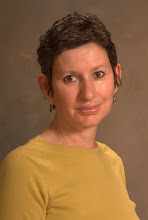
Although it may be cliche, it's still true: In every challenge, lessons are derived. Here are a few of the things I learned during the past 10 months while detouring through the land of breast cancer.
1. I love to blog. This fact must be obvious to those who've been reading along. But this notion extends beyond the blogosphere. The real message is not to ignore or discount one's creative side. Don't wait until retirement, or when the kids are grown, or when the garage is cleaned to nurture your creative spirit. Whether it be writing, sketching, singing, playing an instrument, dancing or sewing, make time for it. The rewards are innumerable. (Along this line, my next blog is under development, but more on that later.)
2. People surprise you. You can never predict who will step into your life when you're in the midst of an ordeal. Without being asked, people whom you barely know will reach out in a particularly thoughtful way, and, from there, they will evolve into good friends. Conversely, others whom you counted on may not be up to the challenge.
3. Don't hesitate to connect with someone going through a bad patch. Some part of us wants to hold back and not risk the emotional fallout of talking to those who are bereaved, sick, or suffering in some way. But human contact is a good thing. Pick up the phone and dial. If people really don't want to interact, they just won't answer. But they will know that you made the effort. And that knowledge goes a long way on a bad day.
4. Ask your doctor if you have dense breasts. If so, find out what screening methods, beyond mammography, are available to you, because mammograms simply don't do a good enough job on dense tissue. No diagnostic tool can prevent cancer. But good screening can lead to early detection, which can help doctors treat cancer before it spreads. Given what I know now, I would have paid for annual breast MRIs, despite the prohibitive price tag. At the very least, I would have enrolled in the clinical trials for the Sonocine, which is a whole breast ultrasound. (You can find the link to Sonocine on the list to the right.) The most compelling evidence is this: I had a second smaller tumor, the size of a pea, in the same neighborhood as the peanut-sized growth that I discovered. This smaller lump was lying deeper in the tissue. Neither I, nor any of my doctors, could feel it, and it was not visible on my mammograms. However, the radiologist saw it on my MRI. Given its location, this little tumor could have kept growing unnoticed until it was quite large. I was fortunate, really, to have had a palpable growth close to the skin. So while MRI is very expensive, think about it if you have very dense breasts.
5. Find out what you can about your medical history. Ask older relatives about how their parents and grandparents died. Should you face a cancer diagnosis, doctors want as much genetic information as you can give them.
6. Do your research and know the facts of your condition. Doctors seem to respect this. If you can talk intelligently about your treatment, you and your doctors will have a more meaningful dialogue and you'll feel better about the decisions that everyone makes.
7. Chemo was not as bad as I feared. The best advice I heard from my oncologist was not to make assumptions about how chemo would affect me. He was right, because I fared much better than I imagined I would.
8. Fitness matters. But not for the reasons you think. There is no magic bullet that prevents serious illness. Eating broccoli and running six miles a day are no guarantee of immunity. However, should illness strike, being in excellent physical shape helps to overcome the rigors of surgery, chemo, radiation, or whatever the treatment happens to be. If you get sick, you want to be strong in order to fight back.
9. Enroll in the best health insurance plan that you can reasonably afford. If your develop a major illness, you want the freedom to select the best doctors and facilities.
10. You're stronger than you think and your loved ones are, too. You wonder how you will cope, should you develop a serious health problem.,or how your spouse or kids will manage. While the whole experience is scary, everyone will fall in line and do what needs to be done. I don't have enough distance on this experience yet to be certain, but I expect that a battlefield mentality takes over. You just move through whatever the next task is. Fretting and worry consume valuable energy that is needed elsewhere. My best advice is to check those emotions at the door and stay focused on the remedies.
My last treatment is tomorrow!!!! The next blog is getting underway. Stay tuned.
7/29/08


7/21/08
Power To You
Walking along the corridor of the hospital the other day, I saw another patient who I'd exchanged glances or half-smiles with, although we'd never spoken.
This woman was walking a little ahead of me, but as I was moving at a much faster clip, I quickly caught up with her. I expected that we would share the usual greeting -- or non-greeting, really -- and I would continue on my way. But as I passed by her, she turned to me and said, "I've been wanting to talk to you." So I slowed my pace to match hers, and said, "Yes?"
She surprised me by revealing that she had been watching me and wished that she, too, could leave the house with her head uncovered. At the moment, she was wearing a bucket hat, and I remembered that she always wore a hat or a wig. Cancer-related hair loss is so devastating, it was no surprise that this woman needed shoring up. I assured her that before long, her hair would come back and her hat days would be well behind her.
"Do you want to see my hair?" she said. Then, in the middle of hospital hallway, she lifted off her hat and uncovered her head, which was encased in the black netting that football players wear under their helmets. Next, she began to peel off the netting. I expected to see a combination of bald spots and patchy growth. To my surprise, this woman's dark gray hair was much longer than mine. She had more than an inch of perfectly fine hair all over her scalp.
I was dumbfounded, and stammered, "You have lots of hair. You don't need to cover it up." She demurred, although I'm not sure why. But by initiating a hallway conversation and showing me what was under her hat, she was clearly reaching out for support. I suspected that she wanted a push toward the next step.
My family and friends know that I love to offer solutions. If they present me with a quandary, they will get my ideas on the best fix, whether or not they actually want to hear them. So seizing a chance to hold forth, I suggested the following remedy: Put on some make-up, and do one errand with your head uncovered -- the post office, the bank, the supermarket, whatever. Just take on one errand and, after that, assess whether you still need the hat or the wig.
She didn't sign on to this idea, but she didn't say, "No," either. As the conversation ended, and I turned to go, she called after me. With her fist raised and clenched, she said, "Power to you." Puzzled by this whole encounter, I walked to the car thinking about all of the ways in which we trip ourselves up and let inhibitions take charge.
This happened on Friday, and I saw her again this morning. I asked if, over the weekend, she had gone out bare-headed, and she said, "No." But today she appeared stronger and with more resolve. She told me that she was going to attempt a trip to the supermarket. "Good luck," I yelled as she walked away.
We'll see what happens. I have seven treatments left. I'll consider it a victory if within that time, this woman walks into the waiting room, head uncovered and newly empowered.
This woman was walking a little ahead of me, but as I was moving at a much faster clip, I quickly caught up with her. I expected that we would share the usual greeting -- or non-greeting, really -- and I would continue on my way. But as I passed by her, she turned to me and said, "I've been wanting to talk to you." So I slowed my pace to match hers, and said, "Yes?"
She surprised me by revealing that she had been watching me and wished that she, too, could leave the house with her head uncovered. At the moment, she was wearing a bucket hat, and I remembered that she always wore a hat or a wig. Cancer-related hair loss is so devastating, it was no surprise that this woman needed shoring up. I assured her that before long, her hair would come back and her hat days would be well behind her.
"Do you want to see my hair?" she said. Then, in the middle of hospital hallway, she lifted off her hat and uncovered her head, which was encased in the black netting that football players wear under their helmets. Next, she began to peel off the netting. I expected to see a combination of bald spots and patchy growth. To my surprise, this woman's dark gray hair was much longer than mine. She had more than an inch of perfectly fine hair all over her scalp.
I was dumbfounded, and stammered, "You have lots of hair. You don't need to cover it up." She demurred, although I'm not sure why. But by initiating a hallway conversation and showing me what was under her hat, she was clearly reaching out for support. I suspected that she wanted a push toward the next step.
My family and friends know that I love to offer solutions. If they present me with a quandary, they will get my ideas on the best fix, whether or not they actually want to hear them. So seizing a chance to hold forth, I suggested the following remedy: Put on some make-up, and do one errand with your head uncovered -- the post office, the bank, the supermarket, whatever. Just take on one errand and, after that, assess whether you still need the hat or the wig.
She didn't sign on to this idea, but she didn't say, "No," either. As the conversation ended, and I turned to go, she called after me. With her fist raised and clenched, she said, "Power to you." Puzzled by this whole encounter, I walked to the car thinking about all of the ways in which we trip ourselves up and let inhibitions take charge.
This happened on Friday, and I saw her again this morning. I asked if, over the weekend, she had gone out bare-headed, and she said, "No." But today she appeared stronger and with more resolve. She told me that she was going to attempt a trip to the supermarket. "Good luck," I yelled as she walked away.
We'll see what happens. I have seven treatments left. I'll consider it a victory if within that time, this woman walks into the waiting room, head uncovered and newly empowered.
7/14/08
Box of Chocolates
Cancer treatments do eventually come to an end. Last week, Frank, another patient whose daily radiation treatment was scheduled close to mine, received his last dose.
I talked to Frank's wife, while he was with the technicians. She told me that Frank was so diminished by all of the attacks against his cancer, she wasn't sure he was aware that he was receiving his last treatment. Frank's tumor is located in his throat and is inoperable because of its proximity to the carotid artery. He finds it difficult to speak, and his wife stays close to his side. Nearly 80-years-old, Frank underwent chemo and radiation simultaneously. His wife said that he was so weak after his treatment the day before, the hospital staff transported him to their car in a wheelchair.
Frank returned to the waiting room after his last session, and he and his wife exchanged a few words before Frank left again to change into his street clothes. Frank's wife then reached into her totebag and pulled out a box of chocolates. At the same time, Bill, the ever-present hospital volunteer, walked into the room. Frank's wife stood up, presented Bill with the chocolates as a gift, and expressed her deep appreciation for all of his support.
The waiting room for radiation patients is tiny and intimate. I was sitting only a few feet away, and by chance, I was very much drawn into this private exchange. Bill was obviously touched by the gift, and Frank's wife was clearly grateful for whatever words of encouragement Bill had imparted during the preceding weeks.
In talking to Bill earlier, I had learned that he had cancer, himself, four years ago, so he brings a survivor's perspective to his conversations with patients. My guess is that he and Frank, men who are close in age, understood each other and formed a solid bond. By the time the chocolates had changed hands, everyone was misty-eyed, including me. Although it was only a token, the thank you gift to Bill -- and the emotions that accompanied it -- spoke loudly about giving and receiving and about our collective need to lean on each other.
I don't know what Frank's future will hold -- only that he has a strong network in his wife, four grown daughters and his grandchildren. Like Frank, my cancer treatments will also soon come to an end, but emerging from 10 months of medical care raises questions. Where will I find myself when the detour is over? In what ways will I have changed along the way?
I talked to Frank's wife, while he was with the technicians. She told me that Frank was so diminished by all of the attacks against his cancer, she wasn't sure he was aware that he was receiving his last treatment. Frank's tumor is located in his throat and is inoperable because of its proximity to the carotid artery. He finds it difficult to speak, and his wife stays close to his side. Nearly 80-years-old, Frank underwent chemo and radiation simultaneously. His wife said that he was so weak after his treatment the day before, the hospital staff transported him to their car in a wheelchair.
Frank returned to the waiting room after his last session, and he and his wife exchanged a few words before Frank left again to change into his street clothes. Frank's wife then reached into her totebag and pulled out a box of chocolates. At the same time, Bill, the ever-present hospital volunteer, walked into the room. Frank's wife stood up, presented Bill with the chocolates as a gift, and expressed her deep appreciation for all of his support.
The waiting room for radiation patients is tiny and intimate. I was sitting only a few feet away, and by chance, I was very much drawn into this private exchange. Bill was obviously touched by the gift, and Frank's wife was clearly grateful for whatever words of encouragement Bill had imparted during the preceding weeks.
In talking to Bill earlier, I had learned that he had cancer, himself, four years ago, so he brings a survivor's perspective to his conversations with patients. My guess is that he and Frank, men who are close in age, understood each other and formed a solid bond. By the time the chocolates had changed hands, everyone was misty-eyed, including me. Although it was only a token, the thank you gift to Bill -- and the emotions that accompanied it -- spoke loudly about giving and receiving and about our collective need to lean on each other.
I don't know what Frank's future will hold -- only that he has a strong network in his wife, four grown daughters and his grandchildren. Like Frank, my cancer treatments will also soon come to an end, but emerging from 10 months of medical care raises questions. Where will I find myself when the detour is over? In what ways will I have changed along the way?
7/6/08
Radiation Wisdom: Arrive Early and Borrow From Bossie
This weekend marked the half-way point in my radiation treatments. Aside from causing a little tiredness, the treatments are more of a recurring episode in my daily routine than anything else. Every weekday, I drive 15 minutes to the hospital, always with the goal of arriving promptly for my 10:10 a.m. slot. If I can be gowned and seated in the waiting room by then, I'm usually on my way back to the parking lot by 10:25 a.m. If I arrive a little late, however, I'm likely to wait 20 minutes for my turn.
Another patient, Frank, who is in his seventies, is scheduled five minutes after me, but his treatment lasts much longer than mine. Frank and his wife always arrive early, which makes me the wild card for the technicians. Their daily quandry: Will Cathleen arrive on time this morning, so we can squeeze her in before Frank's treatment? Or should we just take Frank because he's gowned and ready to go 15 minutes ahead of schedule?
If I have to compete with people who are habitually early, I'll lose every time. Because I have window in which to start a project before I go to the hospital, I get drawn into that activity, and leave the house too late to allow for contingencies, such as lingering traffic from the morning commute, or the off ramp for the hospital being closed. Don't think I'm complaining here. Compared to the unpleasantness of chemo, radiation is a walk in the park. I just need to remember to bring a book -- or (is it possible?) get out the door a few minutes earlier.
While radiation is considerably easier on the patient, most people do suffer from its side effect of red and irritated skin. To counter this, doctors recommend a cream that carries the following language on the jar:
Directions for Use: Wash udder and teat parts thoroughly with clean water and soap before each milking to avoid contamination of milk. Apply to the udder after each milking, massaging into the skin.
Warning: Do not use on parts affected with cow pox.

Yes, this cream, called "Udderly Smooth," is for cows and is manufactured by Redex Industries in Salem, Ohio. But Udderly Smooth is no ordinary animal product. This little lotion has a whole life beyond the dairy farm. The company's website, http://www.uddercream.com/, has a subsection labeled "oncology," which discusses using the cream for skin problems associated with cancer treatments and diabetes. People also report using it to remove make-up, relieve sunburn, prevent skin cracking in winter, and alleviate chaffing when hiking and cycling. Even quilters praise the cream because it doesn't make their hands greasy, and thus cause stains on their fabrics. Best of all, a 12-ounce jar costs less than $5.00.
So, armed with an ample supply of cow cream, I have only 18 treatments to go. And that's udderly marvelous.
Another patient, Frank, who is in his seventies, is scheduled five minutes after me, but his treatment lasts much longer than mine. Frank and his wife always arrive early, which makes me the wild card for the technicians. Their daily quandry: Will Cathleen arrive on time this morning, so we can squeeze her in before Frank's treatment? Or should we just take Frank because he's gowned and ready to go 15 minutes ahead of schedule?
If I have to compete with people who are habitually early, I'll lose every time. Because I have window in which to start a project before I go to the hospital, I get drawn into that activity, and leave the house too late to allow for contingencies, such as lingering traffic from the morning commute, or the off ramp for the hospital being closed. Don't think I'm complaining here. Compared to the unpleasantness of chemo, radiation is a walk in the park. I just need to remember to bring a book -- or (is it possible?) get out the door a few minutes earlier.
While radiation is considerably easier on the patient, most people do suffer from its side effect of red and irritated skin. To counter this, doctors recommend a cream that carries the following language on the jar:
Directions for Use: Wash udder and teat parts thoroughly with clean water and soap before each milking to avoid contamination of milk. Apply to the udder after each milking, massaging into the skin.
Warning: Do not use on parts affected with cow pox.

Yes, this cream, called "Udderly Smooth," is for cows and is manufactured by Redex Industries in Salem, Ohio. But Udderly Smooth is no ordinary animal product. This little lotion has a whole life beyond the dairy farm. The company's website, http://www.uddercream.com/, has a subsection labeled "oncology," which discusses using the cream for skin problems associated with cancer treatments and diabetes. People also report using it to remove make-up, relieve sunburn, prevent skin cracking in winter, and alleviate chaffing when hiking and cycling. Even quilters praise the cream because it doesn't make their hands greasy, and thus cause stains on their fabrics. Best of all, a 12-ounce jar costs less than $5.00.
So, armed with an ample supply of cow cream, I have only 18 treatments to go. And that's udderly marvelous.
6/22/08
Acts of Kindness
You recognize them by their grey hair and burgundy blazers. George Bush (the first) would have praised them as glimmers among his 1,000 points of light. They are the legions of hospital volunteers, who donate their time and good cheer to foster our better health.
These good Samaritans play a visible role in cancer treatment. During chemo, I noticed the same woman volunteering every time I was there. She brought pillows and blankets to the patients hooked to IVs, chatted with family members, and assisted the nurses in small ways.
The radiation technicians and doctors rely on volunteers, too. Bill, a courtly gentleman in his late seventies, is at the hospital four mornings a week to assist with the radiation process. Because radiation is a daily occurrence, it's hard not to know Bill. He sits in the "gowned" waiting room, which is where patients, dressed in hospital robes, wait their turn to lie under the beams. Bill learns all the patients' names and gleans little tidbits about their lives -- whether or not they have children, where they work, what they're reading, etc. By doing this, everyone sitting nearby also learns a little something about the others being treated. Thus, Bill breaks the ice and creates a social network among the patients.
Bill also helps the technicians by escorting patients to and from the treatment rooms, or to the examination rooms on the days when they see the radiation oncologist. I don't know what Bill did before he retired and became a hospital volunteer. He's a natural at creating a welcoming environment and helping people to relax.
Those who prefer to keep to themselves in a hospital setting may wince at the idea of Bill facilitating conversation among strangers in a waiting room. But Bill's efforts are a good thing, because the whole process of cancer treatment wears people down. Exposure to his kindness, which he dispenses regularly and without pay, is uplifting, really.
I had a less than kind moment myself the other day, and since confession is good for the soul, let me get this out. I was in the bank parking lot about to get back into my car when a woman passed by me and said, "I like your hair." Since I'm now sporting a credible likeness to Sinead O'Connor, I was taken aback for a beat and paused before responding, "It's the chemo. This my post-cancer look." Hearing this, the woman visibly drew in a breath and was clearly stunned. I finished off the moment by saying, "Thanks, it's starting to grow back," before getting into the car.
Later, I thought about my reaction. I could have just said, "Thanks," and skipped the explanatory language. Perhaps my gut instinct was that her words were insincere, although in retrospect I doubt that was the case. I think now that she was applauding my boldness. So I'm chalking this experience up to my being a little slow on the learning curve and not being fully comfortable in my own skin yet. The next time someone makes a comment, however, I'll be better able to respond.
I have the example of Bill and the other hospital volunteers who dispense so much caring each day. They've taken the bumper sticker notion of committing random acts of kindness and incorporated it into their daily routines. Here's to the folks in the burgundy blazers.
These good Samaritans play a visible role in cancer treatment. During chemo, I noticed the same woman volunteering every time I was there. She brought pillows and blankets to the patients hooked to IVs, chatted with family members, and assisted the nurses in small ways.
The radiation technicians and doctors rely on volunteers, too. Bill, a courtly gentleman in his late seventies, is at the hospital four mornings a week to assist with the radiation process. Because radiation is a daily occurrence, it's hard not to know Bill. He sits in the "gowned" waiting room, which is where patients, dressed in hospital robes, wait their turn to lie under the beams. Bill learns all the patients' names and gleans little tidbits about their lives -- whether or not they have children, where they work, what they're reading, etc. By doing this, everyone sitting nearby also learns a little something about the others being treated. Thus, Bill breaks the ice and creates a social network among the patients.
Bill also helps the technicians by escorting patients to and from the treatment rooms, or to the examination rooms on the days when they see the radiation oncologist. I don't know what Bill did before he retired and became a hospital volunteer. He's a natural at creating a welcoming environment and helping people to relax.
Those who prefer to keep to themselves in a hospital setting may wince at the idea of Bill facilitating conversation among strangers in a waiting room. But Bill's efforts are a good thing, because the whole process of cancer treatment wears people down. Exposure to his kindness, which he dispenses regularly and without pay, is uplifting, really.
I had a less than kind moment myself the other day, and since confession is good for the soul, let me get this out. I was in the bank parking lot about to get back into my car when a woman passed by me and said, "I like your hair." Since I'm now sporting a credible likeness to Sinead O'Connor, I was taken aback for a beat and paused before responding, "It's the chemo. This my post-cancer look." Hearing this, the woman visibly drew in a breath and was clearly stunned. I finished off the moment by saying, "Thanks, it's starting to grow back," before getting into the car.
Later, I thought about my reaction. I could have just said, "Thanks," and skipped the explanatory language. Perhaps my gut instinct was that her words were insincere, although in retrospect I doubt that was the case. I think now that she was applauding my boldness. So I'm chalking this experience up to my being a little slow on the learning curve and not being fully comfortable in my own skin yet. The next time someone makes a comment, however, I'll be better able to respond.
I have the example of Bill and the other hospital volunteers who dispense so much caring each day. They've taken the bumper sticker notion of committing random acts of kindness and incorporated it into their daily routines. Here's to the folks in the burgundy blazers.
6/15/08
Photons And Electrons
Radiation is a curious process. It differs from chemo in that the gestalt of radiation is more akin to a science experiment than to a medical procedure. We're all familiar with chemo. Very strong drugs are infused intravenously and circulate throughout the body on a search and destroy mission.
Radiation, however, resides at the intersection of physics and biology. Some people have radioactive seeds surgically implanted in their bodies. My treatment is more traditional. Rays are being beamed at the site where my growth was removed. The radiation penetrates into the body's tissues and attacks all the dividing cells in the neighborhood. Later, the normal cells will reinvigorate themselves and resume their regular activities, while the dead cancer cells will lie scattered about as so much detritus.
Treatments are dispensed in small increments. My individual radiation plan calls for 35 treatments, each lasting just a few minutes. During my first 28 treatments, the technicians are sending photons, which have to ability to go deeply into the breast tissue. For the final seven sessions, they will switch to electrons and target the top layers of skin around the surgery scar. Treatments are given five days a week, which means that radiation takes about six weeks to complete.
Thus far, I've been radiated three times. Compared to chemo, this is a snap. You undress from the waist up, put on a hospital gown and wait for a technician to find you. Once you arrive at the treatment room, you remove the gown and lie down on the table. Two technicians adjust your exact positioning based on what the oncologist prescribed. They remind you to keep very still, and then they leave the room. The machine that delivers the radiation hovers about 24 inches overhead and to the right and briefly emits a high-pitched whine. Next, the machine re-positions itself about 75 degrees counter-clockwise from where it started. Again, the high-pitched sound signals treatment is underway, lasting another 30 seconds or so. Once the whining ceases, the doors to the room swing open, the technicians re-emerge, and the session is over. Time for me to move along, so the next patient can have a turn.
Finally, the last phase of my breast cancer project has arrived. Sometime in July I will be done with all of it, and move into a closely monitored maitenance mode. My hair is now about 1/8" long all around. I had a coming out of sorts last night, when my husband and I went to a nice restaurant for dinner with my head uncovered. Although some people did a noticeable double take, I just smiled, enjoyed my meal, and reveled in my return.
Radiation, however, resides at the intersection of physics and biology. Some people have radioactive seeds surgically implanted in their bodies. My treatment is more traditional. Rays are being beamed at the site where my growth was removed. The radiation penetrates into the body's tissues and attacks all the dividing cells in the neighborhood. Later, the normal cells will reinvigorate themselves and resume their regular activities, while the dead cancer cells will lie scattered about as so much detritus.
Treatments are dispensed in small increments. My individual radiation plan calls for 35 treatments, each lasting just a few minutes. During my first 28 treatments, the technicians are sending photons, which have to ability to go deeply into the breast tissue. For the final seven sessions, they will switch to electrons and target the top layers of skin around the surgery scar. Treatments are given five days a week, which means that radiation takes about six weeks to complete.
Thus far, I've been radiated three times. Compared to chemo, this is a snap. You undress from the waist up, put on a hospital gown and wait for a technician to find you. Once you arrive at the treatment room, you remove the gown and lie down on the table. Two technicians adjust your exact positioning based on what the oncologist prescribed. They remind you to keep very still, and then they leave the room. The machine that delivers the radiation hovers about 24 inches overhead and to the right and briefly emits a high-pitched whine. Next, the machine re-positions itself about 75 degrees counter-clockwise from where it started. Again, the high-pitched sound signals treatment is underway, lasting another 30 seconds or so. Once the whining ceases, the doors to the room swing open, the technicians re-emerge, and the session is over. Time for me to move along, so the next patient can have a turn.
Finally, the last phase of my breast cancer project has arrived. Sometime in July I will be done with all of it, and move into a closely monitored maitenance mode. My hair is now about 1/8" long all around. I had a coming out of sorts last night, when my husband and I went to a nice restaurant for dinner with my head uncovered. Although some people did a noticeable double take, I just smiled, enjoyed my meal, and reveled in my return.
6/8/08
Mind And Body
It's Not About the Bike: My Journey Back to Life is Lance Armstrong's account of his struggle against advanced testicular cancer and his subsequent successes in the Tour de France. In the book, Armstrong takes the reader through his early years as a cyclist, through his devastating cancer experience, and finally through his rise, phoenix-like, to the pinnacle of his sport.
Armstrong's theme, which he hints at in the book title, is that he succeeded in the grueling Tour de France partly by drawing on the lessons he learned in his fight against cancer. Armstrong's disease was quite advanced when it was discovered, having reached his brain and other vital organs, and his survival is indeed miraculous. He contends that his illness changed him both psychologically and physically, which worked to his advantage as an athlete. He notes that cancer helped him grow into a more mature, less cocky cyclist. Physically, Armstrong said that his post-cancer physique was leaner, which allowed him to attack the hill-climbing components of the sport more efficiently since he was carrying less bulk.
Although Armstrong goes through a period of aimlessness following his treatment, which he refers to as "survivorship,'' he mostly maintains a positive attitude throughout his cancer ordeal. What is interesting, however, is how he characterized the mental components of illness and recovery. He writes: "I believed...in the doctors and the medicine and the surgeries.... I believed in the hard currency of... intelligence and...research." But Armstrong also noted that he "believed in belief, for its own own shining sake."
He decided that belief in something was preferable to belief in nothing and eventually arrived at the following conclusion: "I didn't fully see, until the cancer, how we fight every day against the creeping negatives of the world, how we struggle daily against the slow lapping of cynicism. Dis-spiritedness and disappointment, these were the real perils of life, not some sudden illness or cataclysmic millennium doomsday."
Dr. Bernie Siegel has also written about illness and positive thinking in several books, including his bestseller, Love, Medicine and Miracles. Dr. Siegel was not really on my radar, but another woman with breast cancer told me that she found his book helpful. So I listened to an Internet radio broadcast in which he focused on breast cancer. For those who are interested, here is the link: http://www.blogtalkradio.com/breastcancerwellness/2008/02/19/Love-medicine-and-miracles-for-breast-cancer-survivors
In short, Dr. Siegel advises patients to empower themselves in many ways: to be proactive in their treatments and to take charge of their lives. He teaches people to use positive messages, imagery, and humor to aid in healing. Dr. Siegel also believes that many of us carry emotional baggage from our childhoods with us, which can lead to illnesses.
Armstrong's theme, which he hints at in the book title, is that he succeeded in the grueling Tour de France partly by drawing on the lessons he learned in his fight against cancer. Armstrong's disease was quite advanced when it was discovered, having reached his brain and other vital organs, and his survival is indeed miraculous. He contends that his illness changed him both psychologically and physically, which worked to his advantage as an athlete. He notes that cancer helped him grow into a more mature, less cocky cyclist. Physically, Armstrong said that his post-cancer physique was leaner, which allowed him to attack the hill-climbing components of the sport more efficiently since he was carrying less bulk.
Although Armstrong goes through a period of aimlessness following his treatment, which he refers to as "survivorship,'' he mostly maintains a positive attitude throughout his cancer ordeal. What is interesting, however, is how he characterized the mental components of illness and recovery. He writes: "I believed...in the doctors and the medicine and the surgeries.... I believed in the hard currency of... intelligence and...research." But Armstrong also noted that he "believed in belief, for its own own shining sake."
He decided that belief in something was preferable to belief in nothing and eventually arrived at the following conclusion: "I didn't fully see, until the cancer, how we fight every day against the creeping negatives of the world, how we struggle daily against the slow lapping of cynicism. Dis-spiritedness and disappointment, these were the real perils of life, not some sudden illness or cataclysmic millennium doomsday."
Dr. Bernie Siegel has also written about illness and positive thinking in several books, including his bestseller, Love, Medicine and Miracles. Dr. Siegel was not really on my radar, but another woman with breast cancer told me that she found his book helpful. So I listened to an Internet radio broadcast in which he focused on breast cancer. For those who are interested, here is the link: http://www.blogtalkradio.com/breastcancerwellness/2008/02/19/Love-medicine-and-miracles-for-breast-cancer-survivors
In short, Dr. Siegel advises patients to empower themselves in many ways: to be proactive in their treatments and to take charge of their lives. He teaches people to use positive messages, imagery, and humor to aid in healing. Dr. Siegel also believes that many of us carry emotional baggage from our childhoods with us, which can lead to illnesses.
While I agree that a mind-body connection exists (anyone who has blushed with embarrassment knows this to be true), Dr. Siegel and I part ways at the idea that one's unresolved emotional issues can morph into cancer cells. Many theories exist to explain the growth of cancer cells, including exposure to toxins, hormonal imbalances, genetic pre-dispositions, and poor diet. Scientists don't fully understand all the underlying causes, but I'm skeptical of the theory that holding a grudge against one's parents is a cancer catalyst. A similar theory, which some authors have floated, is that women bring on breast cancer by being passive and "bottling-up" their emotions in their chests. This idea is ridiculous, and only casts blame on those who are unlucky enough to develop a lump in their breast.
The truth is that well-balanced, fully expressive, upbeat people get sick, too. One of Lance Armstrong's physicians, Dr. Einhorn, spoke to this point in the following observation: "I've seen wonderful, positive people not make it in the end. And some of the most miserable, ornery people survive to resume their ornery lives."
The trick of illness is not to be emotionally defeated by it, but to learn how to use its lessons to a later advantage. Lance Armstrong took the idea of the mind-body connection to the extreme and conquered the Tour de France. He also started a major cancer fundraising organization. But small efforts are good, too. This weekend, I went to Bikram Yoga, a 90-minute yoga class held in a room heated to 105 degrees. Yes, you read that right. It was definitely hot, but I persevered and felt pretty good at the end. I also start radiation in a few days. At the beginning of this detour, I might have had some trepidation about being radiated, but not now. I've vanquished chemo and survived a session of Bikram yoga. How bad can radiation be?
Subscribe to:
Posts (Atom)